[see the website based on the book –
https://www.hanzi-explorer.com/ ]

This book, Chinese by Numbers, lists 7200 Chinese characters, but what are the most important characters?
I have chosen these 120 characters as the most common or important characters, reading down the columns from left to right. Of course, 的 is the most important of all, as it modifies many word types to create adjectives, indicate possession and has many other uses. Click on the picture to visit my new website based on the book and search for characters in the most amazing ways (… once you get the hang of it.)
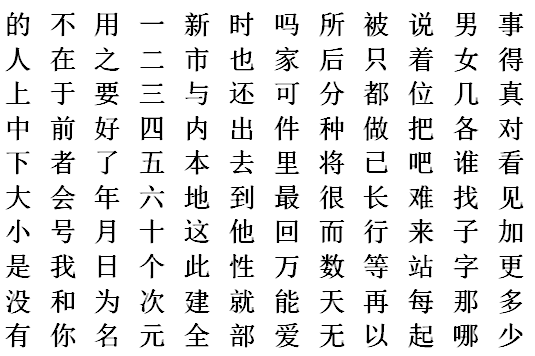
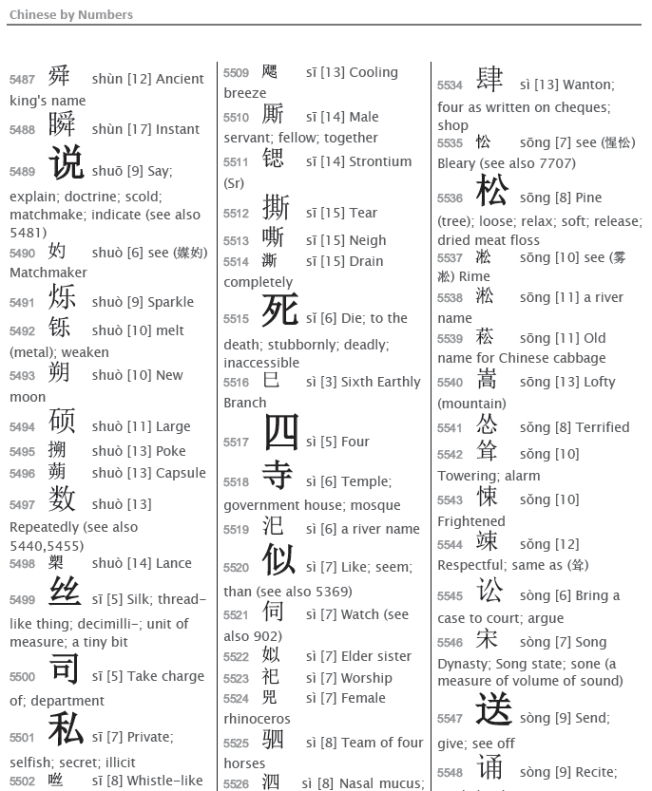
There are plenty more Chinese characters to learn, but these would be a head start. In Chinese by Numbers it is easy to see how important each character is just by the font-size. The larger the font-size the more important and vice-versa. Read more about this book on the other pages of this site.
| 的 | de | indicates possession; adjectival modifier; various grammatical uses |
| 人 | rén | Humanity; adult man or woman; person with a specific occupation; character; state of health; manpower |
| 上 | shàng | Up; high quality; preceding; former; upward; go up; go to; go ahead; appear on stage; serve (dishes); replenish; fix in place; apply; wind up; start work; in progress; on |
| 中 | zhōng | Middle; China; amid; medium; evenhanded; go-between; suitable for; all right |
| 下 | xià | Next; down; low; downward; under; time; descend; come down (e.g. rain); exit; put in; play (chess); unload; capture; yield; finish (work or study); used after a verb to indicate downward motion or completion |
| 大 | dà | Large |
| 小 | xiǎo | Small; of short duration; less than; younger; my |
| 是 | shì | Yes; is; right; many grammatical uses |
| 没 | méi | Have not; is not; did not; none; not as (in comparisons) |
| 有 | yǒu | Have; exist; is; various related grammatic uses |
| 不 | bù | Not; non; no; isn’t; can’t; or not |
| 在 | zài | Exist; in, at, on etc.; remain; belong to; rely on; indicates something is in progress; add emphasis to a negative statement |
| 于 | yú | In, on (a date); serves as a general preposition or verb suffix corresponding to ‘to’, ‘from’, ‘by’ and ‘than’ |
| 前 | qián | Front; straight ahead; ago; former; prior; future |
| 者 | zhě | used as a suffix to indicate a person of a certain type or profession |
| 会 | huì | Assemble; meet; society; main city; opportunity; understand; able to; excel at; likely to |
| 号 | hào | Name; alias; firm; sign; number; size; type; numeric identifier; score |
| 我 | wǒ | I; me; self |
| 和 | hé | And; together; peace; harmony; gentle; a draw; of Japan |
| 你 | nǐ | You; anyone |
| 用 | yòng | Use; expense; need to; purpose |
| 之 | zhī | Leave for; indicates possession; other various grammatical uses |
| 好 | hǎo | Good; well; good health; friendly; OK; Hmm; easy; may; should; very; how much |
| 了 | le | Indicates an action completed; various grammatical purposes |
| 年 | nián | Year; annual; age; stage in life; times; New Year festival or associated things |
| 月 | yuè | Moon; moon-shaped; month; monthly |
| 日 | rì | Day; sun; a period of one day; daily; a particular day (e.g. birthday) |
| 为 | wéi | Do; act as; become; be; various syntactic uses |
| 为 | wèi | For; for the sake of; to; protect |
| 名 | míng | Name; so-called; fame; well-known; measure word for people |
| 一 | yī | One; a; same; also; whole; used with verbs or between repeated verbs to indicate short duration or a single action; various grammatical uses |
| 二 | èr | Two; different |
| 三 | sān | Three; several |
| 四 | sì | Four |
| 五 | wǔ | Five |
| 六 | liù | Six |
| 十 | shí | Ten; ultimate |
| 个 | gè | A general measure word; individual |
| 次 | cì | Order; rank; times; sub-standard; hypo-; measure word for occurrence |
| 元 | yuán | First; principal; fundamental; unit |
| 新 | xīn | New; make anew |
| 市 | shì | City; market; buying and selling; municipality; unit (as in unit of weight etc.) |
| 与 | yǔ | And; with; grant; be on good terms; commend; await |
| 与 | yù | Take part in |
| 内 | nèi | In; wife or wife’s relative; internal organ; imperial palace |
| 本 | běn | This; root; basis; capital; chief; original; our; according to; book; edition; measure word for books, plants |
| 地 | de | used as an adverbial modifier |
| 地 | dì | Earth; geo-; land; field; place; position; situation; distance |
| 这 | zhè | This |
| 此 | cǐ | This; here and now; like this |
| 建 | jiàn | Build; set up; advocate; Fujian province |
| 全 | quán | All; complete; keep intact; wholly |
| 时 | shí | Time; fixed time; season; present; fashion; chance; occasionally; tense (grammar) |
| 也 | yě | Also; various related grammatical uses |
| 还 | hái | Still; too; quite; even; or |
| 出 | chū | Go out; come out; exceed; give; produce; publish; emit; become conspicuous; spend |
| 去 | qù | Go; leave; lose; get rid of; pass away; modifying verbs to indicate timing or direction |
| 到 | dào | Arrive; go to; indicating a completed action; thoughtful |
| 他 | tā | He; something else; another |
| 性 | xìng | Nature; property or quality; suffix indicating a quality; sexual; sex; gender (linguistics) |
| 就 | jiù | At once; already; as soon as; then; as many as; just; only; come near; undertake; suffer; make; go with; concerning |
| 部 | bù | Department; part; ministry; region |
| 吗 | ma | Question marker at the end of a sentence |
| 家 | jiā | Home; family; a person in a certain trade; specialist; school of thought; domestic; a measure word for family or business |
| 可 | kě | Indicates possibility; approve; can; yet; so; ever (in rhetorical questions); suit |
| 件 | jiàn | Measure word for matters or clothes; item; document |
| 里 | lǐ | Inside; in; lining; neighbourhood; native place; a unit of length of 500 metres; indicating a place in adverbs of place |
| 最 | zuì | Most; best |
| 回 | huí | Return; turn around; reply; circle; report back; measure word for occurrences; Muslim |
| 万 | wàn | Ten thousand; large number; absolutely |
| 能 | néng | Talent; energy; capable; can |
| 爱 | ài | Love; enjoy; care about; tend to |
| 所 | suǒ | Place; office; measure word for buildings; various grammatical uses as an auxiliary |
| 后 | hòu | After; back; last; offspring; empress |
| 分 | fēn | Divide; assign; distinguish; branch; fraction; identifies the denominator; a single unit in many systems of measurement |
| 分 | fèn | Component; natural limit; affection |
| 种 | zhǒng | Species; race; seed; courage; measure word for type, sort or kind |
| 将 | jiāng | Be going to do; support; take care of; breed; provoke; with (in idioms); and |
| 很 | hěn | Very |
| 而 | ér | And; (conjunction with various grammatical purposes) |
| 数 | shǔ | Count; enumerate; reckon |
| 数 | shù | Number; numeral; fate; a few; approximately |
| 天 | tiān | Day; sky; Heaven; season; weather; innate; God |
| 无 | wú | Nil; without; no; regardless of |
| 被 | bèi | Indic. passive tense; quilt |
| 只 | zhī | Single; measure word for animals, boats and certain paired things |
| 只 | zhǐ | Only; just |
| 都 | dōu | All; whole of; even; already |
| 做 | zuò | Do; write; compose; engage in; become; be used as; agree to a relationship; pretend |
| 已 | yǐ | Already; cease; thereafter |
| 长 | cháng | Long; length; forte; surplus |
| 行 | xíng | Go; walk; trip; travel; temporary; do; behaviour; OK; competent; shall; (of medicine) take effect |
| 行 | háng | Row; profession; business; position in a family; measure word for lines of things |
| 等 | děng | Wait; till; kind; grade; equal; and so on; indicating plural |
| 再 | zài | Again; continue |
| 以 | yǐ | With; by means of; according to; because of; so as to; at (a point in time); used in compounds to indicate relative time or place |
| 说 | shuō | Say; explain; doctrine; scold; matchmake; indicate |
| 着 | zhe | Verb suffix usually indicating continuation of action |
| 着 | zhāo | A move in a chess game; trick; add; all right |
| 着 | zháo | Touch; feel; burn; after a verb to indicate achievement; fall asleep |
| 着 | zhuó | Wear (clothes); touch; apply; whereabouts; dispatch |
| 位 | wèi | Position; location; throne; digit; measure word for people |
| 把 | bǎ | Handle; hold; control; guard; near; bind. Measure word for objects with handles. Used before the object of a verb when it precedes the verb. |
| 吧 | ba | (Used at the end of a sentence to suggest; approve; doubt; presume) |
| 难 | nán | Difficult; cause difficulties; not easy; displeasing |
| 难 | nàn | Tragedy; take to task |
| 来 | lái | Come; occur; do; future; past; various grammatical uses to modify verbs |
| 站 | zhàn | Stand; stop; station; service centres |
| 每 | měi | Each; every; often |
| 起 | qǐ | Rise; remove; appear; initiate; draft; establish; get; indicates start point; measure word for instances; indicates upward direction; afford; links verb and object |
| 男 | nán | Male; son |
| 女 | nǚ | Woman |
| 几 | jǐ | How many?; several |
| 几 | jī | Small table; almost |
| 各 | gè | Each; various; respectively |
| 谁 | shéi | Who; in rhetorical questions to indicate no one or anyone |
| 找 | zhǎo | Look for; give change |
| 子 | zǐ | Son; child; humans; ancient term of respect; philosophy; seed; egg; subsidiary; a small hard lump; a measure word for a small bundle held in the hand; first Earthly Branch |
| 子 | zi | Noun suffix |
| 字 | zì | Word; Chinese character; pronunciation; handwriting style; receipt; alias; |
| 那 | nà | That; there; so |
| 哪 | nǎ | Which; where |
| 事 | shì | Matter; trouble; job; responsibility; attend upon |
| 得 | dé | Get; equals; complacent; be done; expressing anguish; used for special grammatical purposes |
| 得 | de | after a verb indicates possibility |
| 得 | děi | Need; have to; be sure to; cozy |
| 真 | zhēn | True; really; distinctly; regular Chinese script; image; natural state |
| 对 | duì | Correct; face; oppose; compare; opposite; treat; measure word for pair or couple; concerning |
| 看 | kàn | Look; consider; call on; regard; treat (a patient); look after; caution! |
| 见 | jiàn | See; meet with; appear to be; refer to; opinion |
| 加 | jiā | Add; increase; append |
| 更 | gèng | More; further |
| 多 | duō | Many; much; in excess; more than; how much; emphasis applied to extent |
| 少 | shǎo | Less; few; missing; owe; a moment |
Available from:
http://www.amazon.com/Chinese-Numbers-ultimate-method-characters/dp/1922022241/a
http://www.bookdepository.com/Chinese-by-Numbers-David-Pearce/9781922022240
http://www.barnesandnoble.com/w/chinese-by-numbers-david-j-pearce/1110603411?ean=9781922022240
Australian sales:
http://www.vividpublishing.com.au/chinesebynumbers/
UK sales:


 Chinese by Numbers