Here are some reasons for using Chinese by Numbers instead of a typical Chinese dictionary.
To illustrate this case I will use the Oxford Concise Chinese-English Dictionary, which boasts around 4000 characters and which I have used for over ten years. It is a great small dictionary. I will also be using the Contemporary Chinese Dictionary which I bought in China. This is also excellent, has 2700 pages and a total of over 8000 characters, including several hundred that cannot be written with a standard computer, and hence are not in my book. Here are some examples that I might want to look for:
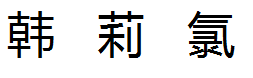
Case one. Let us start with 韩. I see this character often in my newspaper and I want to find out its meaning, so I look it up in my Oxford. I start with the left side and look for the radical. Count strokes, eight. Search for radical. First problem is that the left-hand side is not a radical. Abandon that search. Return to search for the right-hand side. Count strokes, 4. Search for radical. Find radical. Search through radical index, but still I can’t find it! Why is this very common character not in my Concise Oxford? Repeat the process in my Contemporary Chinese Dictionary and find the character is located on page 763. (By now, several minutes of searching has elapsed.) I turn to page 763 and am confounded to find that the character refers to a state of the Zhou dynasty, a thousand years ago. But why is it so prominent in my newspaper? Turn to Chinese by Numbers: Look up any part of the character and quite quickly find entry 2036, which is “Korea.” Now I know my newspaper article is all about South Korea.
Case two. Suppose I come across this character, 莉, searching through my Concise Oxford again does not find it. I will try the Contemporary Chinese Dictionary. The character has three possible radicals, so which is the radical to search on? Characters with 艹 cover three pages of my radical index! Characters with seven other strokes occupy two columns of that index. I don’t want to wade through that many, but it is not listed under 禾 or 刂. Turn to “Chinese by Numbers” and look up艹 in combination with either禾 or 刂, or禾 and 刂 separately or together. Find it quickly. Along the way find this fact – all characters containing 利 are pronounced lì, without exception. Remember that for future use.
Case three. I am looking for this character, 氯, and again my Concise Oxford lets me down. It is not there. But this time I recognise the lower part of the character as lù. Because I have this knowledge, this time I go straight for “Chinese by Numbers.” In the pinyin index I find the component lù 录 and from there I can quickly find the Chinese character for Chlorine. I realise that having a good dictionary is vital, but finding characters quickly is better with a specialised book.
Read other pages on this site for more information, or make an online purchase and see for yourself.
[NOTE: Chinese by Numbers is a ‘print on demand’ book. Each order is printed individually, especially for you, so the price is higher than other books sold from remainder stock.]
Available from Amazon and other online sites:

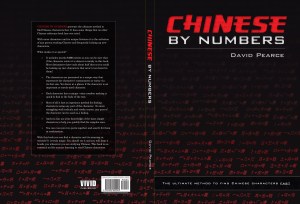
- Available only online
 Chinese by Numbers