Monthly Archives: September 2012

A book for Chinese Learners by a Learner of Chinese

Standard

Buy from Amazon

Chinese by Numbers is not an academic text. It was written by a student of Chinese to meet the needs of learners.

While I have been learning Chinese as a pastime of mine for the last 10 years, I often had these experiences:

  • Spending a lot of time looking up a new character
  • Then finding that the character is not listed in my regular dictionary
  • Knowing the approximate pinyin but wanting to quickly confirm the tone of a character
  • Wanting to confirm the exact form of a known character that I wanted to write
  • Wanting to know if the new character I just found was worth remembering

Most reference books don’t meet these needs:

  • Dictionaries all use the radical + stroke count method that can often be quite slow
  • Most dictionaries for students only have 3000 to 4000 characters. While the rest are not common, they come up often enough to be really frustrating
  • Dictionaries are quite useless for just reviewing the tone or exact form for a known character
  • Dictionaries give equal prominence to the least important characters

For me Chinese by Numbers as a reference book is the most important aid to carry.

  • Quick look up
  • All characters listed
  • Compact listing
  • Concise definitions
  • Prominent display of important characters

Read other pages on this site for more information,  or make an online purchase and see for yourself.

[NOTE: Chinese by Numbers is a ‘print on demand’ book. Each order is printed individually, specially for you, so the price is higher than other books sold to clear remainder stock.]

Available from Amazon and other online sites:

Barnes and Noble

Australian sales

UK sales

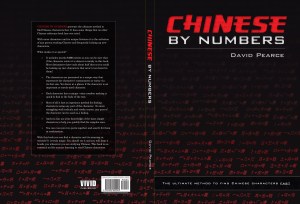
Chinese by Numbers Cover

Available only online

Why I love Putonghua

Standard

Buy from Amazon

Putonghua, or “ordinary language”, is the Chinese word for modern Mandarin. But it is much, much more than that.

In the 1950s, while the top communist leaders were destroying the country economically and culturally, some others were actually trying to improve things. At that time, the Chinese people spoke hundreds of local dialects and one region’s language was incomprehensible to another’s. The vast majority of common people couldn’t read or write Chinese characters. To raise literacy and improve communication, the government introduced Putonghua.

Putonghua has three main features:

  1. Simplified characters
  2. Standard pronunciation ( a variant of the Beijing dialect)
  3. Pinyin (roman letters and tone markings indicating the precise pronunciation)

Nowadays, most regional Chinese still speak their local dialects among themselves, but when they need to they can also speak the national language, Putonghua, and read and write simplified characters.

In my book, Chinese by Numbers, I have studiously avoided using the traditional, more complex version of Chinese characters. My reasoning is this. Only foreign Chinese and the Chinese of former foreign colonies and Taiwan continue to cling to traditional characters. But to me, with 1.4 billion Chinese using simplified characters the other 50 million or so seem inconsequential. My other reason is this. Even the Chinese had to simplify their language so that the vast majority of people could learn to read and write. I am a foreigner, what hope would I have with traditional characters! Actually, ninety percent of simplified characters are the same or very similar to their complex versions.

Besides the above, Putonghua is a package. If you want to speak the language of China, use the written language of China, not some other place. If your Chinese teacher is teaching you traditional characters, ask them why.

Another way of looking at this is to consider the English language either written in gothic script or modern printing. If you picked up an historical manuscript from England in the sixteenth century, you would still be able to make out the words, you would appreciate the beauty of the script, you would acknowledge the historical and cultural importance of that document, but you would not want to go back to using that day-to-day.

So I love Putonghua because it is comprehended by all Chinese when spoken or written.

But I felt that there was just one thing missing from Putonghua and that was a better way to find Chinese Characters. Though modern Chinese generally master the 4000 to 5000 characters they need for everyday use, they still need to look up dictionaries for the other rarer characters that they may not have memorised. Then even they have to identify the radical, count the strokes in the radical and the remainder of the character, and search through the radical index at the front of their dictionaries.

Now, non-Chinese have an advantage over the native-speakers, as they can use my book, Chinese by Numbers, to speed up their search.

Read other pages on this site for more information,  or make an online purchase and see for yourself.

Available from:
http://www.amazon.com/Chinese-Numbers-ultimate-method-characters/dp/1922022241

http://www.bookdepository.com/Chinese-by-Numbers-David-Pearce/9781922022240

http://www.barnesandnoble.com/w/chinese-by-numbers-david-j-pearce/1110603411?ean=9781922022240

Australian sales:

http://www.vividpublishing.com.au/chinesebynumbers/

UK sales:

http://www.amazon.co.uk/Chinese-Numbers-ultimate-method-characters/dp/1922022241/ref=sr_1_1?ie=UTF8&qid=1336792167&sr=8-1
Character Recognition Websites

Standard

Buy from Amazon

I am always searching for faster ways to find Chinese characters. I have found two sites where you can draw the characters with your mouse and the site displays a selection of possible characters.

The first one I found was at this site:

http://www.chinese-tools.com/tools/mouse.html

My comments on this site are

  1. To get a good result you need to enter the strokes in the right order. That is unfortunate, because a lot of users will not have studied or understand stroke order. When I entered characters almost perfectly, but in the wrong order, the result was nothing like what I was looking for.
  2. Also, not all characters are included. This is also disappointing. I cannot understand why a site would only show the most common characters. Surely the reason someone is looking up a character is because it is not a common character.

The other site I looked at was:

http://www.nciku.com

This site has a fantastic character recognition program. Even if I draw the character in reverse order it finds the one I am looking for. No matter how badly I draw the character, nciku is spot on. And it has every imaginable character.

My only qualification is that it is not compatible with Internet Explorer, and I noticed at times it was slow to load or just locked up.

But I really recommend this site. It also has an all Chinese version, http://www.nciku.cn/

If you don’t have a computer on you at all times you can get fast look-ups of characters in my book, Chinese by Numbers.

Available from:
http://www.amazon.com/Chinese-Numbers-ultimate-method-characters/dp/1922022241

http://www.bookdepository.com/Chinese-by-Numbers-David-Pearce/9781922022240

http://www.barnesandnoble.com/w/chinese-by-numbers-david-j-pearce/1110603411?ean=9781922022240

Australian sales:

http://www.vividpublishing.com.au/chinesebynumbers/

UK sales:

http://www.amazon.co.uk/Chinese-Numbers-ultimate-method-characters/dp/1922022241/ref=sr_1_1?ie=UTF8&qid=1336792167&sr=8-1